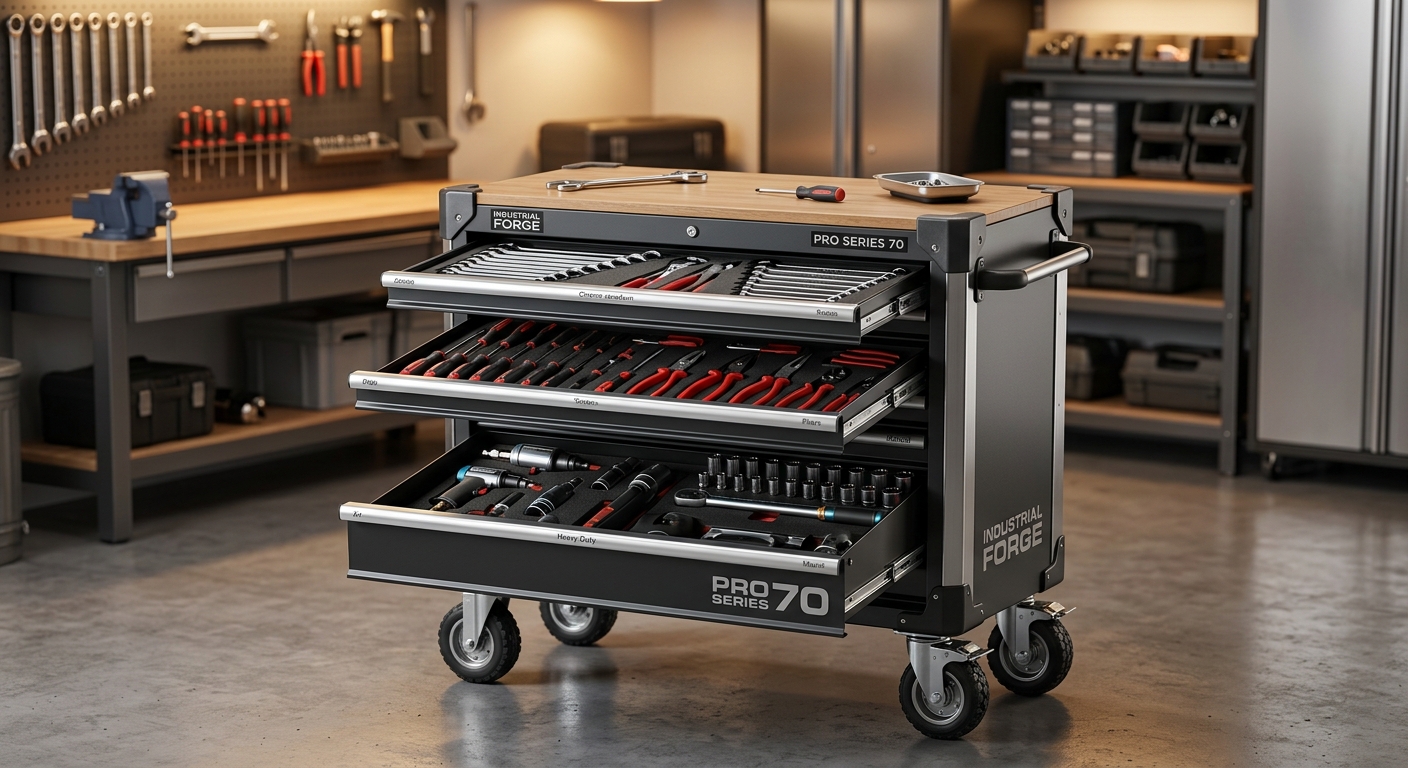
A good tool cart lasts decades. A bad one frustrates you within weeks. Here's what to check before buying.
1. Steel Gauge
Steel gauge measures thickness — lower numbers mean thicker steel. 14-gauge is heavy-duty (1.9mm), 18-gauge is standard (1.2mm), and 20-gauge is light-duty (0.9mm). For workshop use, look for 14-18 gauge. Anything thinner will flex under load and eventually bend.
2. Caster Quality
Casters make or break a tool cart. Look for 3-inch or larger wheels with locking mechanisms on all four casters (not just two). Rubber wheels roll smoother on rough garage floors than hard plastic. Test the locks — they should engage firmly and not slip under load.
3. Weight Capacity
Manufacturers list weight capacity, but not all test it the same way. Look for carts that specify "tested" or "verified" capacity rather than "theoretical" or "maximum" capacity. A 250-lb tested rating means more than a 500-lb theoretical rating.
4. Finish
Powder coating is superior to paint for workshop storage. It resists scratches, chips, and rust better than liquid paint. Check that the coating covers all surfaces, including the underside and inside of drawers. Bare metal anywhere will rust in a garage environment.
5. Shelf Adjustability
Fixed shelves limit what you can store. Look for carts with adjustable shelf heights so you can customize storage for tall power tools, short parts bins, or bulky equipment. Adjustable shelves should lock securely at each height setting without wobbling.